Edward R Tufte’s second of the five analytic design theories is the use of ‘small multiples’ to visualize information variables. ‘Small multiples’ refers to numerous individual visuals representing information that, when viewed together, give the viewer a clearer understanding of said information. In stylized visual media, this is utilized in different ways for different purposes.
- Videogames:
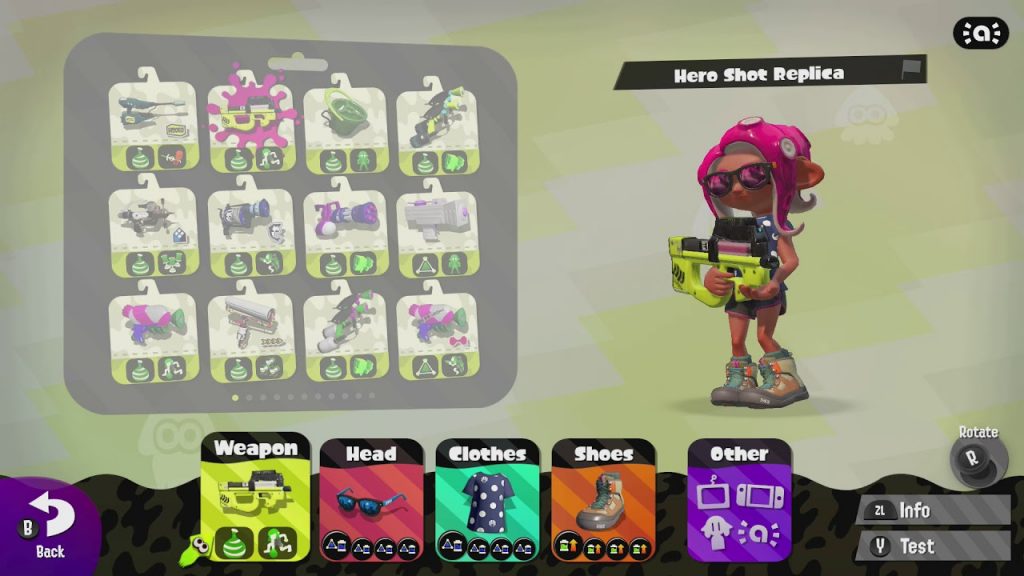
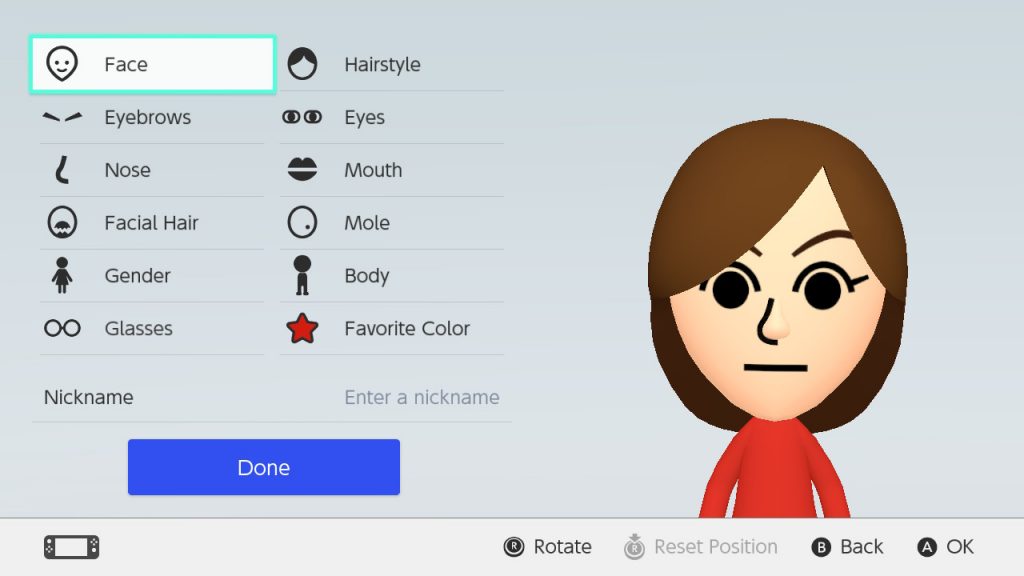
Small multiples are utilized throughout the experience of video games, the most frequent use being the UI (user interface), consisting of navigable menus used for discovering, selecting and navigating through visual representations of data and commands in order to personalize or customize the game’s UX (user experience) for individual players. This is practised through the alteration of; the visual appearance of a virtual character, accessibility features in the software, and types of gameplay experiences suited to individual preferences and requirements.
Videogame company Nintendo excel at this and have provided some excellent examples of direct, yet stylish, UIs throughout the years, with my favorites (pictured above) being Splatoon 2’s ‘equip’ menu, and the Nintendo Switch avatar creation tool the ‘Mii Maker’. Each is designed particularly to match the aesthetic and purpose of the task at hand whilst being simple to use for the player, with the Splatoon 2 equip menu using patterns and clothing-hanger shapes to reflect dressing up your character, and the Mii Maker being clean and simple to put sole emphasis on the avatar being created from scratch to resemble a real human being’s likeness, making it easier for the player to concentrate on creating their Mii perfectly.
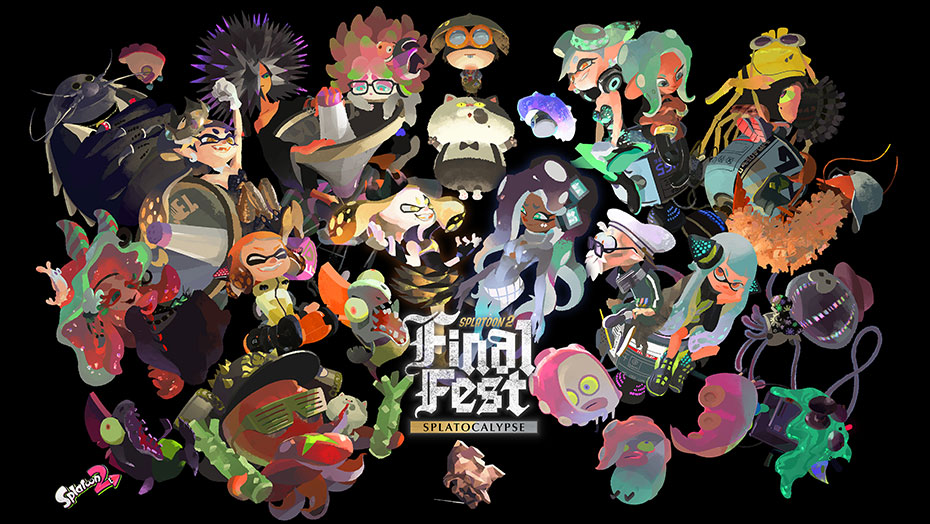
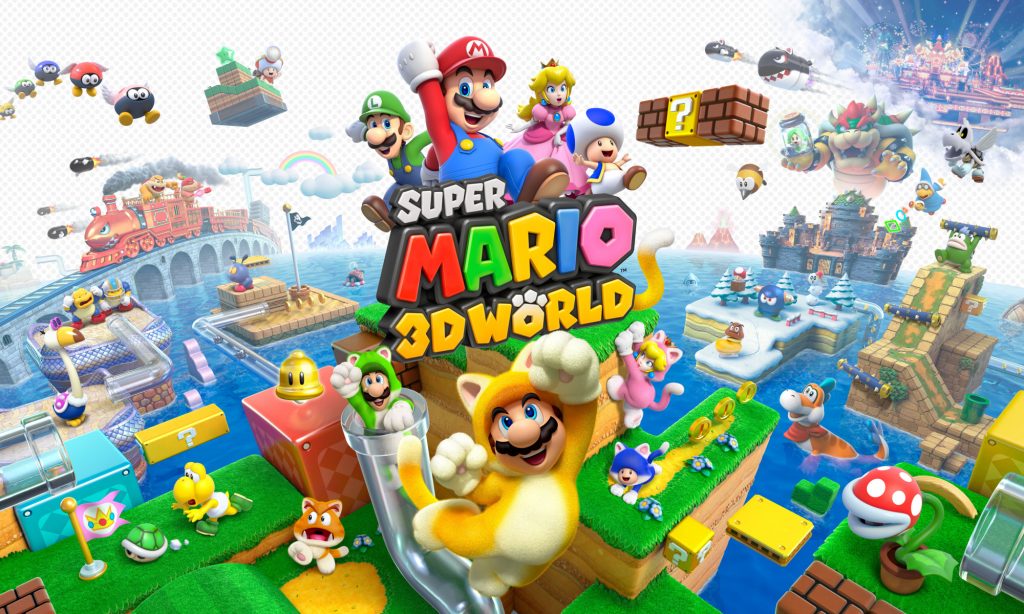
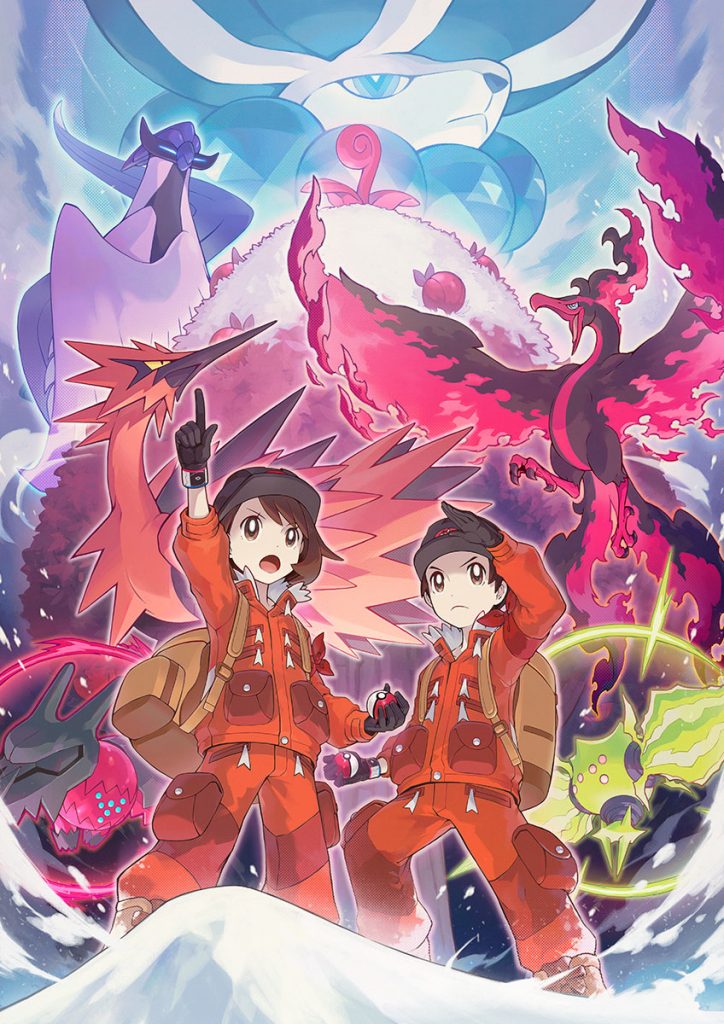
Promotional artwork for video games additionally feature small multiples, but in a completely different way. Since video games commonly use a large and varied amount of individually represented pieces of content, for instance; characters, locations/levels, enemies, items, abilities etc., the promotional artwork of many games aims to capture all of these in the same piece of art to show the viewer the overall visual experience of the game they are about to play. Above are a few pieces of promotional artwork for various Nintendo games that incorporate small multiples in this way.
- In graphic novels:
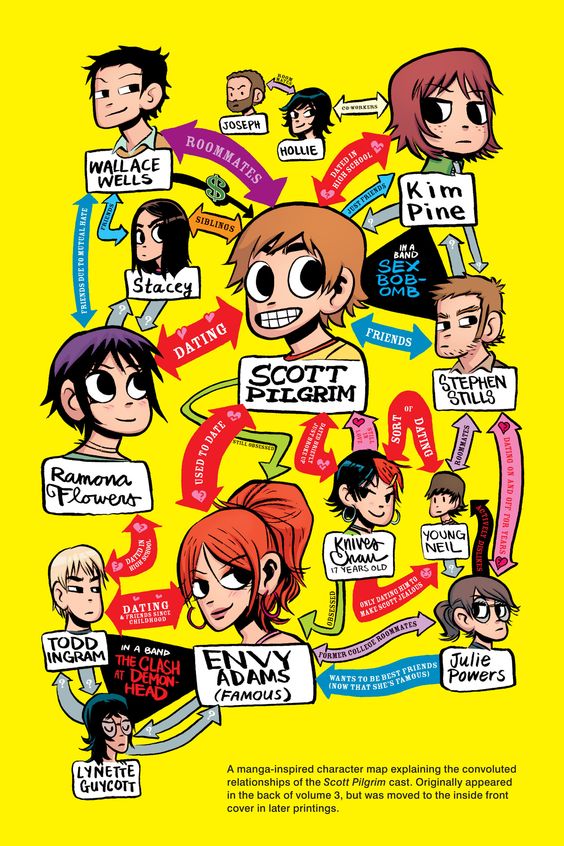
Graphic novels employ small multiples in a variety of ways due to the nature of the medium. One of my favourite uses is in Bryan Lee O’Malley’s graphic novel series ‘Scott Pilgrim’, pictured above, where profiles of the main characters are littered around the page with text filled arrows drawn between them, presenting how each character is connected through their various relationships. This is inspired by and references Japanese Manga publications, where it’s made for the reader to aid them with remembering and understanding the characters of the story if not read consistently, as manga series typically last for a long time through a great number of books.
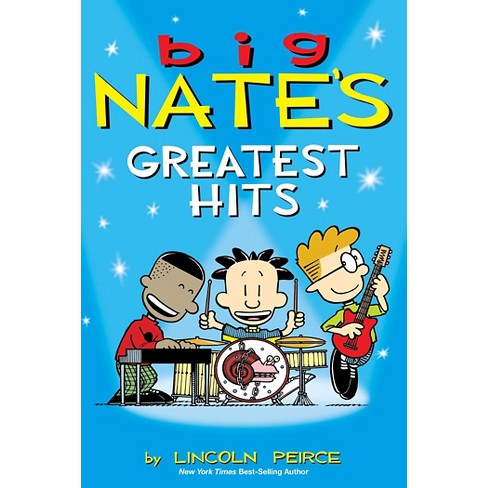
For the front covers of the Big Nate books, the main character Nate (and often Nate’s friends) is the centre of focus and can be seen performing an action relevant to the title or contents of the book. Nate can be seen drumming with his two friends playing the keyboard and guitar as part of their brand on the cover above, as the title of the book is ‘Big Nate’s Greatest Hits’, which is referencing ‘greatest hits’ albums by real bands. All these characters and their props have been brought together to convey what kind of events will happen in the book and the kind of energy and aesthetic the characters brought together convey – fun, lightheartedness, and humour.
References:
Figure 1: Nintendo (2018) Just in the equip menu: Splatoon 2 [Video game screen recording]. Available online: https://www.youtube.com/watch?v=MyIYN6E89aI [Accessed: 11/11/2021]
Figure 2: Nintendo (2017) How to create a Mii [Video game screenshot]. Available online: https://en-americas-support.nintendo.com/app/answers/detail/a_id/22378/~/how-to-create-a-mii [Accessed: 11/11/2021]
Figure 3: Nintendo (2019) Final Splatfest [Promotional artwork]. Available online: https://splatoon.nintendo.com/news-video/splatocalypse-is-coming/ [Accessed: 11/11/2021]
Figure 4: Nintendo (2013) Super Mario 3D World [Promotional artwork]. Available online: https://mynintendonews.com/2014/05/01/edge-looks-at-the-making-of-super-mario-3d-world-includes-concept-art/ [Accessed: 11/11/2021]
Figure 5: Nintendo (2020) The Crown Tundra [Promotional artwork]. Available online: https://swordshield.pokemon.com/en-us/expansionpass/the-crown-tundra/ [Accessed: 11/11/2021]
Figure 6: Bryan Lee O’Malley (2013) Character relationship map [Illustrated book diagram]. Available online: https://www.pinterest.co.uk/pin/308285536977458393/ [11/11/2021]
Figure 7: Lincoln Peirce (2015) Big Nate’s Greatest Hits [Book cover]. Available online: https://www.target.com/p/big-nate-s-greatest-hits-big-nate-paperback-by-lincoln-peirce/-/A-16761519 [Accessed: 11/11/2021]