As a personal future ambition, I would like to pursue being a graphic novelist in producing original stories. Yet, despite this, I have decided to deliver my storytelling project through an original RPG built using the software RPG Maker MV. I personally love playing story-intensive video games and have always wanted to create one myself, so this is a great opportunity for me to create something that doesn’t require the deep technical and 3D skills I lack that are required to make more commonplace modern games. Some RPGs have had the best stories in the entirety of the video game community, so it is absolutely a valid medium for genuine storytelling. Additionally, my Final Major Project assignment will be implementing numerous graphic novels into an interactive experience, so I decided to test myself with something different and entirely unfamiliar production-wise instead.
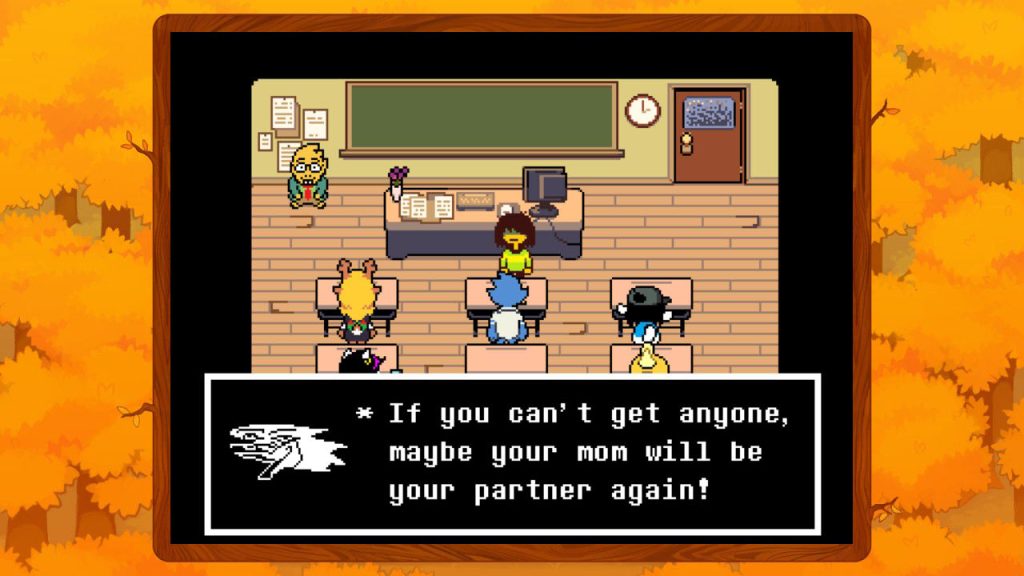
I greatly appreciate ‘indie’ game projects, especially when it comes to RPGs, due to the unadulterated charm and originality they manifest thanks to the creator(s) ability to express their ideas in full without hindrance, which in many cases allows them to create something more tight-knit, more akin to art than a corporate product. So, a huge inspiration to me is Toby Fox and his ongoing RPG project ‘deltarune’, the pseudo-sequel to the hit 2015 release ‘UNDERTALE’. deltarune is an RPG that manages to incorporate seemingly diverse concepts whilst still brimming with style, visual flair and aesthetic perfection. Its worlds, cast of characters and stories, among many other aspects, are created to be condensed and limited visually to mimic retro game design but pack immense individuality in order to not conform to the general rules of what a video game can and cannot be.
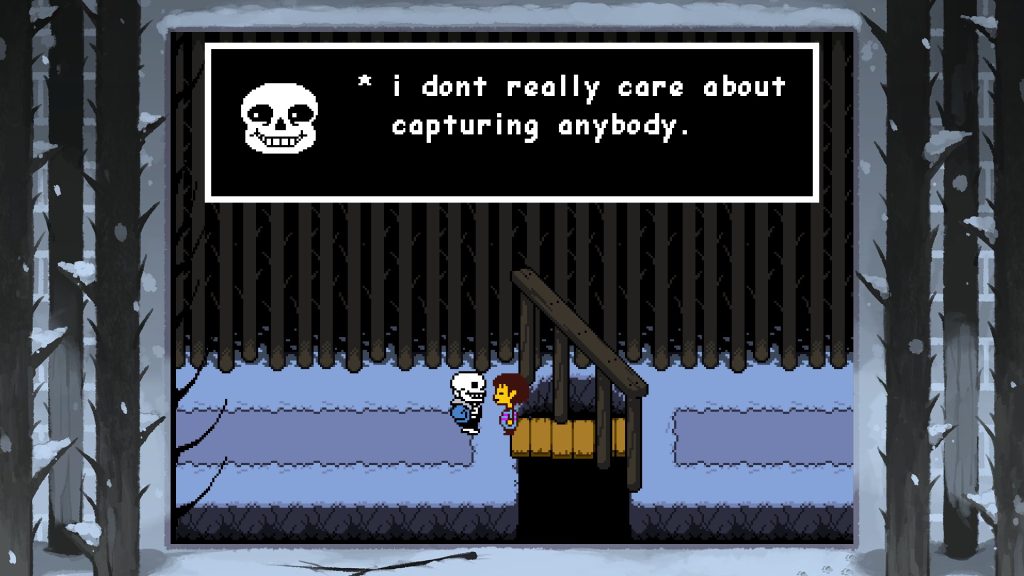
A particular favourite feature of mine is the inclusion of non-pixelated highly detailed borders that surround the main game’s viewing window that displays artwork relating to the current area the player is in in the story. Whilst the main window shows the player what is happening in a more condensed fashion, the side borders allow the player to greater imagine and feel the game’s world and story as if it were more realistic, which enables them to create their own imaginative interpretation of the story unfolding in their mind. I believe this approach applies the player’s imagination to create a unique amazing world and story instead of relying on raw graphical scope prowess, which requires a lot more time, money and resources. If I’m able to figure out how to do so in my chosen software, I will definitely apply this design philosophy to my own RPG to aid with imagination and storytelling.
References:
https://www.mobygames.com/game/switch/deltarune-chapter-1/screenshots/gameShotId,983724/
https://twitter.com/RPGSite/status/894943971159322624/photo/4